TPD claim eligibility depends on whether your condition meets the permanent disability definition in your insurance plan. Interestingly, most people hold TPD insurance through their super account without realising how the eligibility rules work.
Your automatic super fund and retail insurance policies define total and permanent disability differently, which affects who can claim. At vbr Lawyers, we see Queensland compensation clients who hold TPD policies and need to understand how both systems operate.
This article explains what TPD claim eligibility protects, how illness or injury triggers a claim, and why policy definitions vary between own occupation and any occupation tests. We will also share how other payments interact with TPD claims and where to find reliable information.
What TPD Claim Eligibility Actually Covers
Your TPD claim eligibility covers permanent disabilities that prevent you from working, but the exact definition varies between insurance plans.
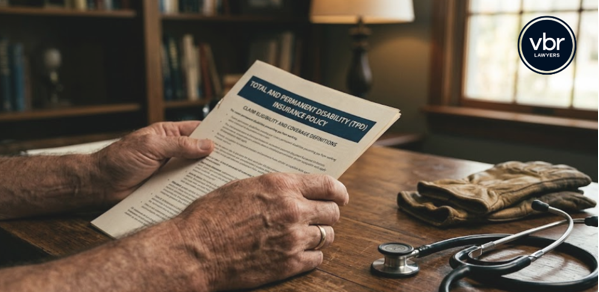
Some policies evaluate whether you can perform your own occupation, while others apply stricter occupation tests. Terminal illness provisions exist separately from TPD, but insurance plans may also include them in the same document.
Two main concepts shape how insurers review your claim.
Total and Permanent Disability Defined
Total and permanent disability means a condition that stops you from performing work duties permanently without the prospect of recovery.
Medical assessments document your functional limitations and determine whether you meet the policy definition. That said, definitions vary between super fund automatic cover and retail insurance documents purchased directly.
How Illness or Injury Affects Eligibility
Physical injuries, mental health conditions, and progressive illnesses can all meet TPD eligibility criteria under insurance policy terms. But the condition must be permanent rather than temporary or recoverable with treatment.
This is why insurers review medical evidence alongside your job duties when applying the disability test to your TPD claim.
Automatic Cover vs Policy-Specific TPD Provisions
Automatic cover and retail TPD policies differ in how they define eligibility, set premiums, and assess claims.
Most people start with automatic protection by default. It comes with your super account and uses standard definitions set by the fund. So your super balance determines how much you will get.
But if you have pre-existing conditions like diabetes or back injuries, this protection typically excludes them or applies waiting periods. The fund insures everyone without medical checks, so they protect themselves by excluding conditions you already have when the cover starts.
Retail policies work differently. You select the amount and choose definitions that match your job type. So your premiums either increase each year as you age (stepped premiums) or stay the same throughout (level premiums).
The trade-off is that these products require medical underwriting before approval, which means insurers review your medical history first.
Bottom line: Stick with automatic cover if your super balance provides enough protection, but consider retail plans when you need customised definitions or higher amounts.
Once you know whether you hold automatic or retail cover, the main features in your insurance determine how eligibility works.
Main Features in TPD Insurance Policies
Policy documents outline the specific disability tests, waiting periods, and medical evidence requirements insurers need before they pay. Features also include rehabilitation support provisions and partial disability payments during assessment periods. Usually, the product disclosure statement breaks down these features in detail.
The disability test in your plan falls into one of two categories:
Occupation-Based Tests in Insurance Policies
Professional and specialist workers often hold plans with own-occupation tests without knowing what that term actually means. These tests assess whether you can perform the duties of your specific job role.
Own occupation cover typically comes with a higher premium because the eligibility bar sits lower than any occupation tests. Either way, medical evidence must show you cannot perform the substantial duties of your usual job for the insurer to approve your TPD claim.
See also: PCD Pharma Franchise in India: Red Flags and Green Flags to Know
Any Occupation Tests and Their Requirements
Any occupation tests require proof that you cannot work in any job suited to your education and experience. The tests set a higher bar for a permanent disability status, but usually cost less in premiums than own-occupation insurance.
During evaluation, insurers consider your transferable skills when assessing whether alternative employment remains possible. Still, the cost difference can be significant, particularly for younger workers with decades of premium payments ahead.
How Life Insurance Calculators Work for TPD Cover
Life insurance calculators estimate cover amounts based on your income, debts, dependents, and ongoing living expenses.
These tools generate estimates of how much you might need by factoring in your family circumstances, children’s future costs, and financial obligations. Some calculators also factor in retirement savings alongside current income to assess total needs.
TPD cover calculations differ from life insurance because they account for ongoing living costs rather than lump sum payments to beneficiaries. Even so, a life insurance calculator helps you check whether your current automatic cover amount in your super account matches your actual financial situation.
Other Payments That Interact With TPD Claims
After you lodge a TPD claim, other benefits like WorkCover, Centrelink disability benefits, and superannuation may affect the amount you receive.
For instance, some documents offset other compensation, while others pay the full lump sum benefit regardless of other payments. Meanwhile, terminal illness claims may pay benefits within a short time of diagnosis under separate provisions.
This offset mechanism surprises people who expect full payment. Because the lump sum benefits work differently depending on your specific policy terms and the circumstances of your disability. Your insurer either offsets other benefits from your payout or pays the full TPD amount.
Information Sources for TPD Claims
Insurance policy documents contain the specific eligibility criteria and definitions that apply to your TPD insurance cover. Within that document, the product disclosure statement breaks down key features, exclusions, and how the claim process works.
What’s more, super fund member services and government resources like ASIC’s MoneySmart website explain TPD insurance types and common terms.
For information about how compensation claims and TPD insurance interact in Queensland, contact vbr Lawyers.